Visiting the Maldives While Grieving: What to Expect

What should you actually expect from a week in the Maldives on Goidhoo Island while grieving? Not a private-island resort, whatever that phrase conjures. Goidhoo is a real, inhabited island with a village of around 500 people, two mosques, a handful of shops, and daily life that continues around you rather than pausing for guests. The privacy comes from the villa you're staying in, not from the island being emptied out for you, and that distinction changes the whole texture of the week.
Getting there is part of the experience, not a delay before it
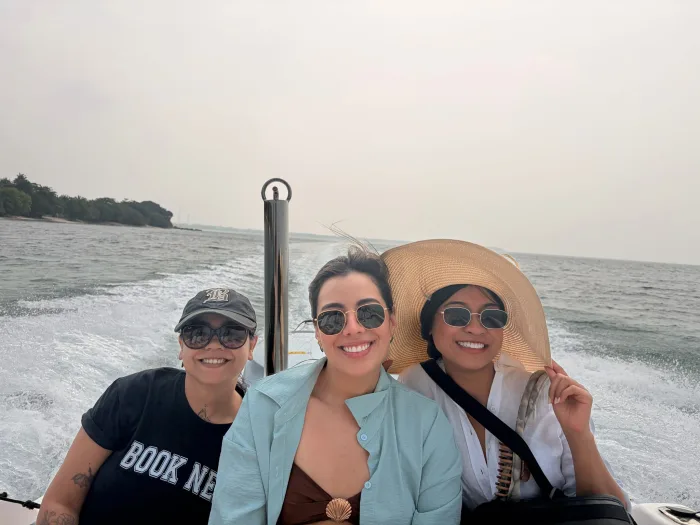
There's no airport on Goidhoo. Getting there means a flight into Malé followed by a speedboat transfer, out across open water into the Baa Atoll, arriving by sea rather than by road. It takes a while, and it's worth treating the journey itself as the beginning of the slowdown rather than an obstacle to get through. By the time the boat pulls up to the island, the version of you that was still half in an airport terminal has usually caught up with the version of you that's actually arrived.
A local island means real village life, not a curated resort loop
Goidhoo is unusual among Maldivian islands for having freshwater lakes, which give it fertile soil rare on coral islands. Locals grow watermelon, banana, and papaya, and the island supplies produce to Malé. It's also home to sizeable land crabs that turn up on paths after dark, and a small fishing and farming economy that has nothing to do with tourism at its center. Staying here means accepting some local norms that don't apply on a private resort island: modest dress is expected in the village itself, away from the villa's own beach, and alcohol generally isn't part of daily life the way it is at resort islands built specifically around foreign tourism. In exchange, you get an island that feels inhabited rather than staged, and a private chef preparing meals in a villa that is genuinely private, just not surrounded by private land.
That trade-off is worth sitting with before you go, because it runs counter to what most people picture when they hear "Maldives." There's no infinity pool bar, no resort staff trained to anticipate every want before you voice it, and no manicured sense that the whole island exists for visitors. What you get instead is quieter and, for grief specifically, often more useful: an island that would carry on exactly the same way whether or not you were there, which can be a relief when so much of grief involves the world seeming to have stopped for everyone else too.
The rhythm of a day built around meals, water, and very little else
A private chef prepares meals using largely local ingredients, fish caught that morning, produce grown a short walk from the villa, and the day tends to organize itself loosely around those meals rather than around any fixed schedule. Breakfast, a stretch of open time, lunch, more open time, then whatever the afternoon's water activity is, before dinner as the light starts to go. There isn't much to plan. Most people find, a day or two in, that they've stopped checking the time altogether, since there's rarely a reason to know what it is.
Grief does something specific near this much water
Snorkeling over the reef near Goidhoo regularly turns up sea turtles and rays close enough to watch for long stretches without them startling. Kayaking at dusk, when the water goes flat and the light drops to something closer to bronze than gold, is one of the quietest parts of any day here. There isn't a clean explanation for why proximity to water this clear seems to loosen something in people who are grieving, but it's a consistent enough pattern that it's worth expecting rather than being surprised by. Some people talk more on the water. Others go completely silent and don't want to be asked why.
A candlelit ceremony on the sand, with almost nothing else happening around it
A closing ceremony on the beach at sunset, marked with candles as the light fades, works partly because of how little competes with it here. There's no ambient city noise, no other tourists filling the frame, no schedule pressing in behind it. Whatever the ceremony is for you, whether that's marking the trip, marking a person, or just marking that a week happened, the island doesn't editorialize. It just gets dark, and the candles are there, and that tends to be enough.
How much stimulation to expect, and when to go
Goidhoo sits at the quiet end of the Grief Trip destinations. There's no city to disappear into and no crowd to blend with. Days are structured loosely around the water, meals, and long unstructured stretches with very little to decide. This suits people who find that too many choices, or too much noise, make grief harder to sit with, rather than easier. The Maldives stays warm year-round, generally between the high twenties and low thirties Celsius, so there's no cold season to plan around. The dry season, roughly December through April, brings the most reliable sun and calmest seas. The wetter monsoon season, roughly May through November, brings more frequent rain and higher humidity, though showers here tend to arrive suddenly, pass through within an hour, and clear to sun again rather than settling in for the day.
The water will still be there in the morning, turtles and all, whether or not you feel like getting in it.
Travel with people who understand
This story is from the Maldives Grief Trip. Small groups, grief workshops, and room to breathe.
See the trips ›You might also like

Review: Cassandra on Maldives Grief Trip
After my mom's unexpected death, my whole world split apart. The Maldives Grief Trip gave me a space to feel alive again, less alone, and truly seen.
Google Review: Maitreyi on Maldives Grief Trip
Maitreyi on the Maldives Grief Trip: grief workshops that felt supportive without overwhelm, and room to verbalise her grief, co-facilitated by Rachel and Blair Kaplan Venables.
Google Review: Cassandra on Maldives Grief Trip
Cassandra, after the unexpected death of her mom, on the Maldives Grief Trip: a beautifully intentional space that made her feel less alone, seen, and alive.