Boat Cruise on the Douro River: Where Grief Flows Naturally
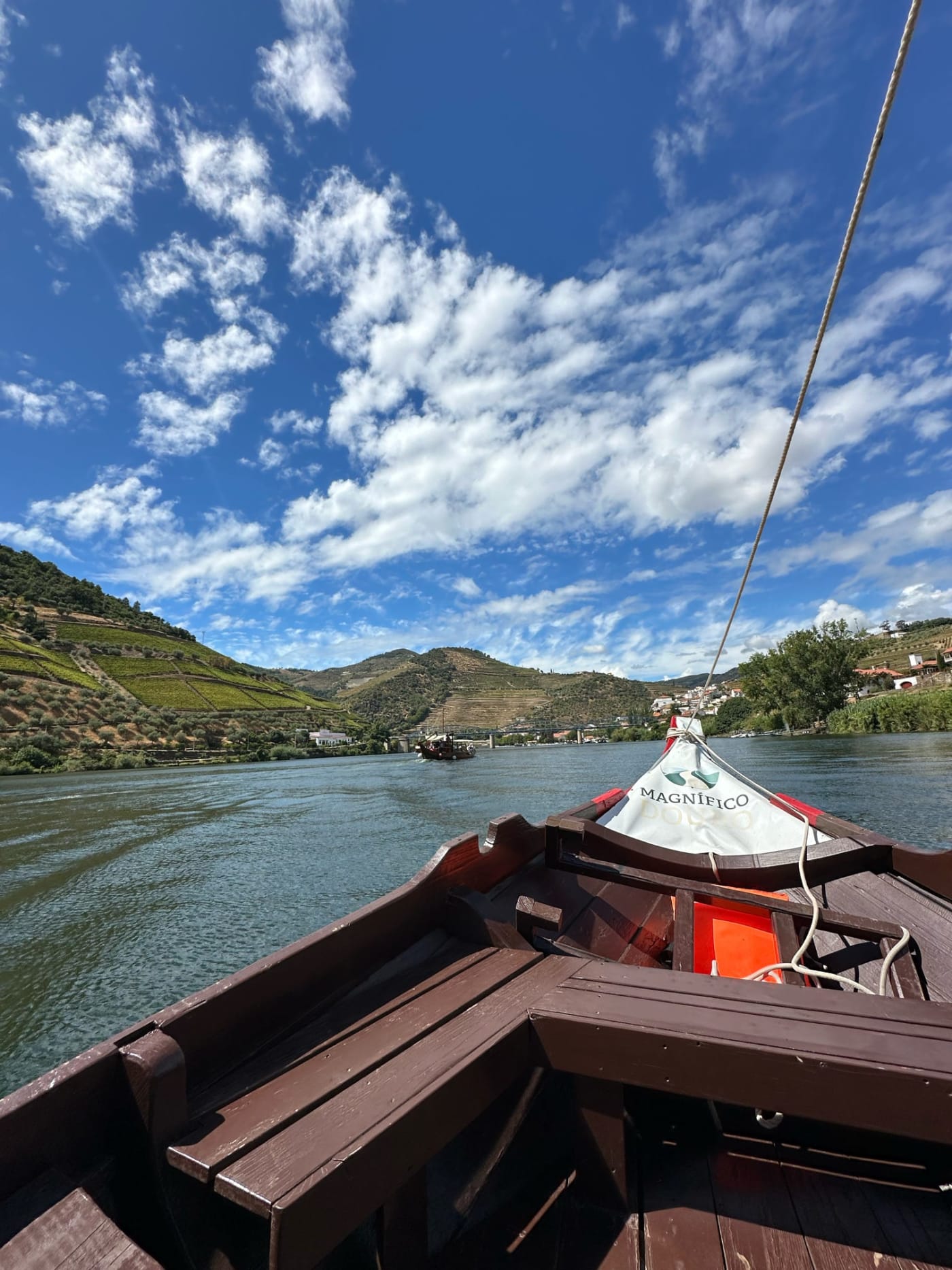
Somewhere in the middle of the Portugal Grief Trip, after Porto and before the closing days in the Douro Valley, there is an afternoon spent on the water. A traditional Rabelo boat, run by Magnífico Douro and the kind once used to carry barrels of port wine down from the vineyards to the cellars in Gaia, carries our small group slowly along the Douro River instead. There is no itinerary to rush through. There is only the river, the terraced vineyards rising on either side, and a boat full of people who are all carrying some version of the same weight.
The Rabelo itself has a quiet lesson in it. For centuries these boats were the only way to move port wine down the river, until roads and railways slowly took that work from them. They could have been the end for these boats. Instead they were kept, and adapted, and given a new reason to be on the water. There is something in that worth sitting with on a grief trip. When someone dies, the traditions we built around them often cannot carry on in the same form, and the ones that matter tend to find a new shape rather than simply ending. The boat carrying us has done exactly that, and it is still, unmistakably, a Rabelo.
It is easy to underestimate how much a setting like this can do for grief work until you have actually sat in it. Water moves. It does not stay still, and it does not ask you to stay still either. There is something about watching a river carry itself steadily forward, without effort and without hurry, that gives grief permission to move a little too, rather than staying pinned in place the way it so often does at home.
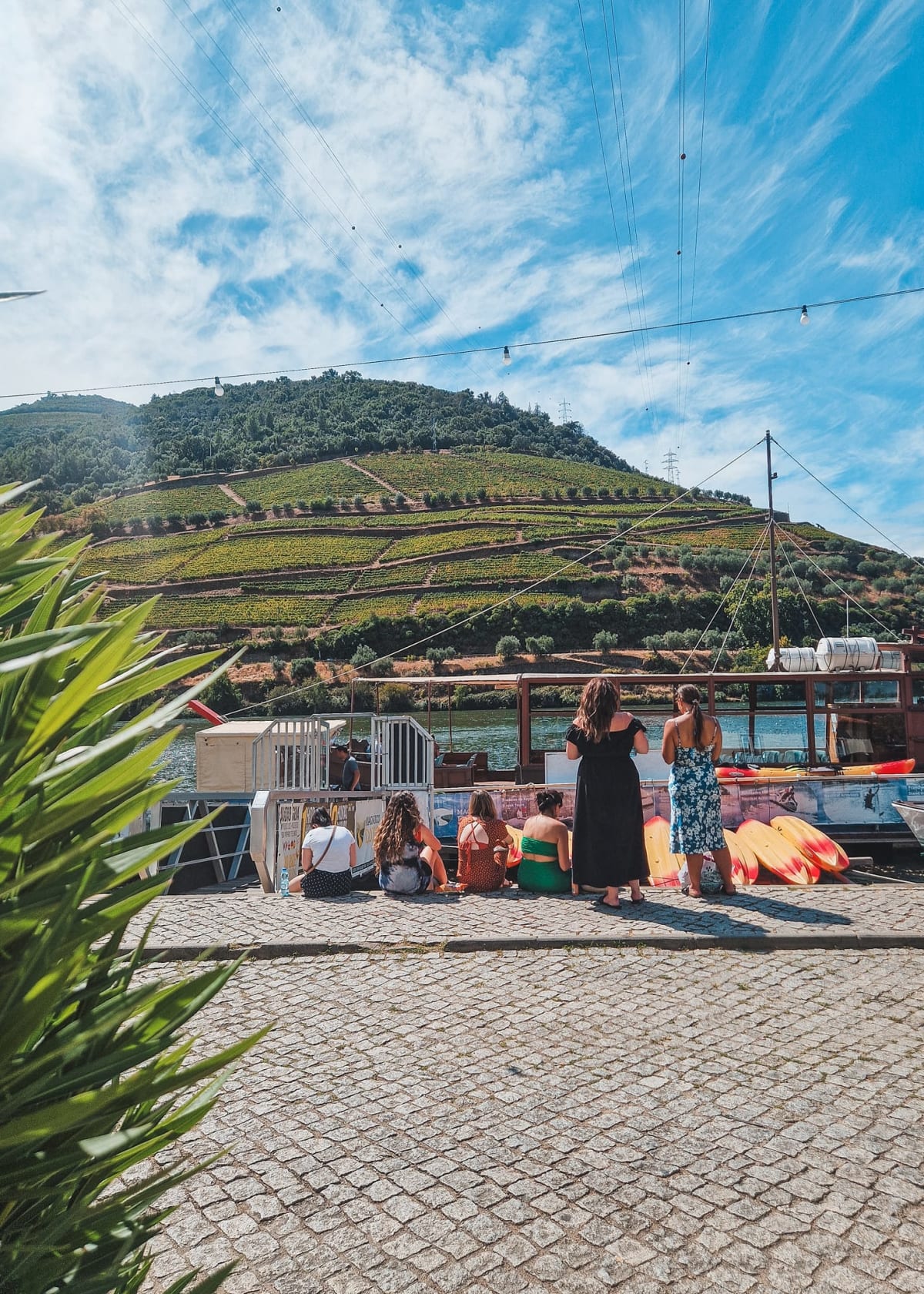
This is part of why the river cruise sits alongside a sharing circle on the same day of the Portugal itinerary. After time on the water, there is naturally more room to talk. Conversations on a boat do not require eye contact the same way conversations across a table do. People can look out at the vineyards while they speak, which tends to make hard things easier to say. Grief that has been sitting quietly for months, or years, often finds its way into words on that boat in a way it has not managed to elsewhere.
On our first trip to Portugal, this was a private Rabelo, just the eight of us, and we rode it upstream, past the point where the roads give out and the river is the only way on. Somewhere up there, away from everything, we stopped and swam in the Douro. And then, without anyone planning it, someone started singing Defying Gravity, the song from Wicked, and it turned out every one of us knew the words. I did not know that about us until that moment. We were connected by grief, of course, but out on the water we were just as connected by joy, and by how much we all still wanted from life. There is a particular freedom in being somewhere that private and that far out. Freedom to be, to make noise, to feel joy without needing to explain it to anyone.
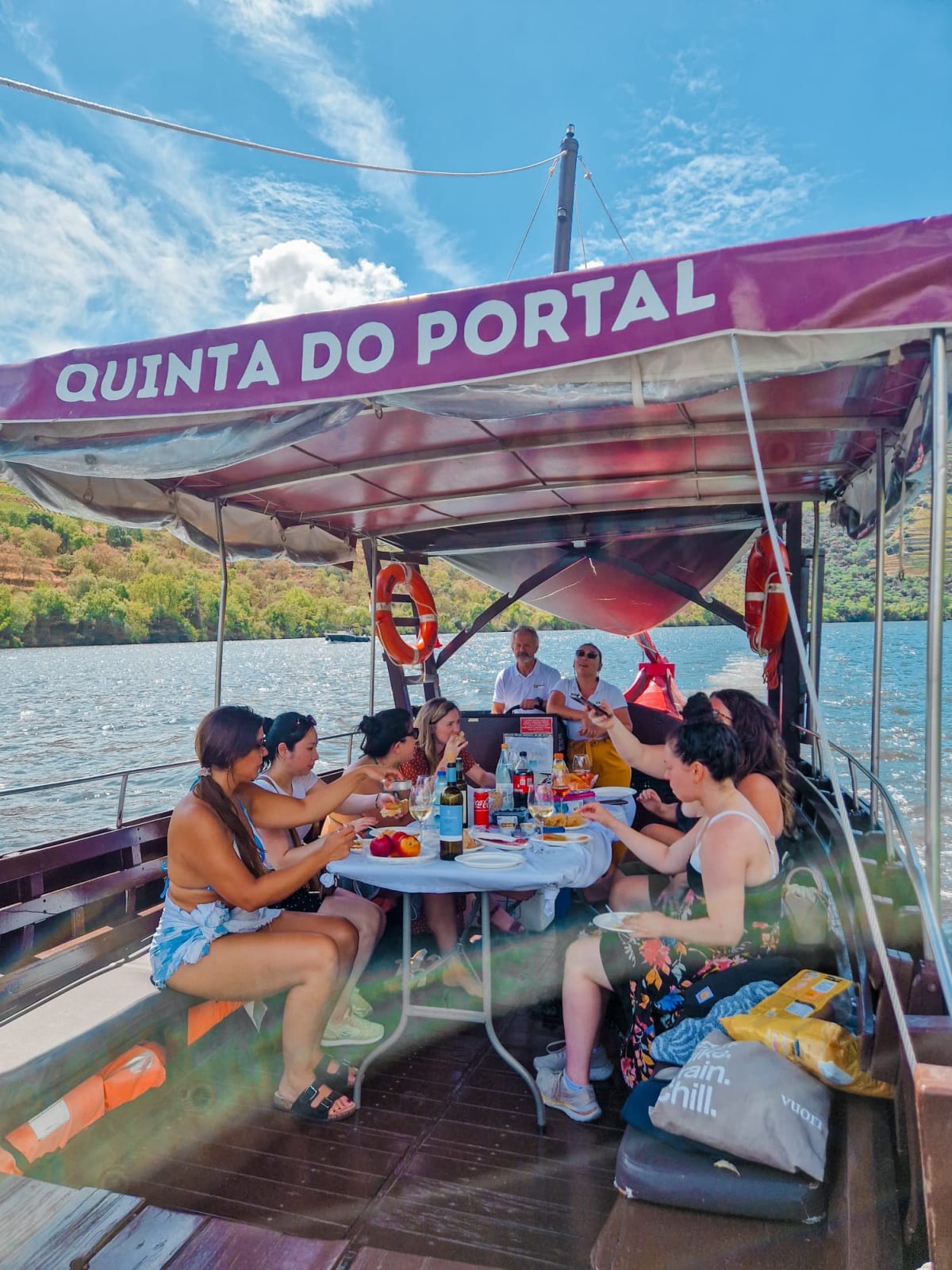
There is also the simple fact of being somewhere so consistently beautiful. The Douro Valley has been shaped by centuries of hellos and goodbyes: generations of families who have worked this land, moved away from it, returned to it, and been buried in the small chapels that dot its hillsides. Grief is not out of place here. If anything, the landscape seems to understand it, holding space for loss the way it has held space for loss many times before.
None of this is designed to fix anything, and it does not. A boat trip does not resolve grief any more than a week away resolves it. What the Douro River cruise offers instead is a change in the conditions under which grief is carried, if only for an afternoon. A different rhythm. A wider view. A boat full of people from a small group who do not need an explanation for why someone has gone quiet, or why someone else cannot stop looking at the water.
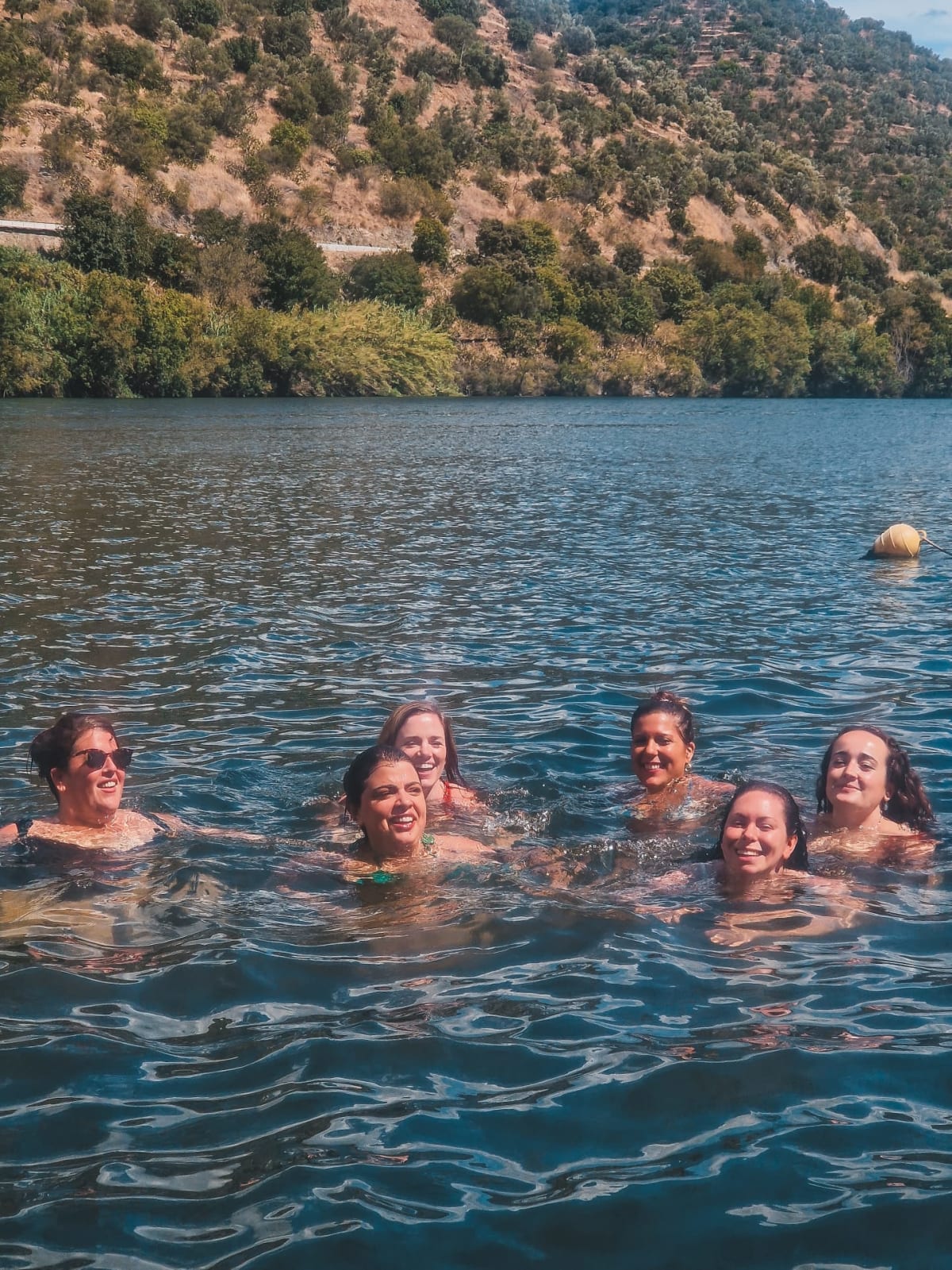
By the time the boat turns back, most people describe feeling lighter, not because anything has been solved, but because they have had a few uninterrupted hours to simply exist alongside their grief rather than around it. That is often the most any single part of a grief retreat can offer, and on the Douro, it tends to arrive quietly, somewhere between one bend in the river and the next.
If you are considering a Portugal Grief Trip and wondering what a day like this actually feels like, this is close to it: less a scheduled activity, more an afternoon where the river does some of the holding so you do not have to do all of it alone.
Travel with people who understand
This story is from the Portugal Grief Trip. Small groups, grief workshops, and room to breathe.
See the trips ›You might also like
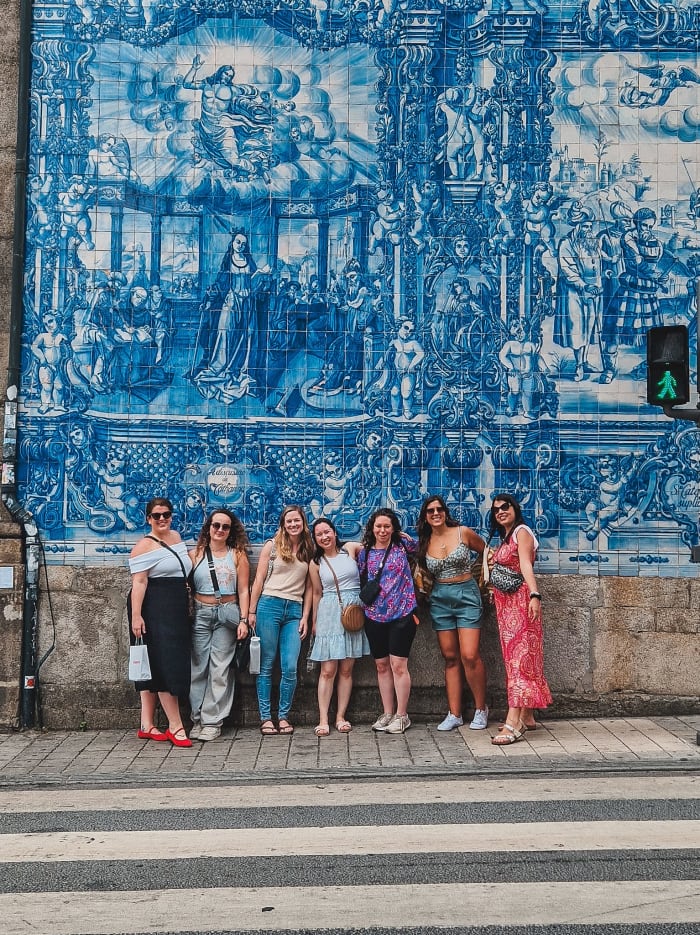
Finding My Grief Soul Sisters on Grief Trips
On a Portugal Grief Trip, Rachel found seven soul sisters, women who understood her grief without needing an explanation. A small group, an ocean of shared loss, and a bond that changed her.
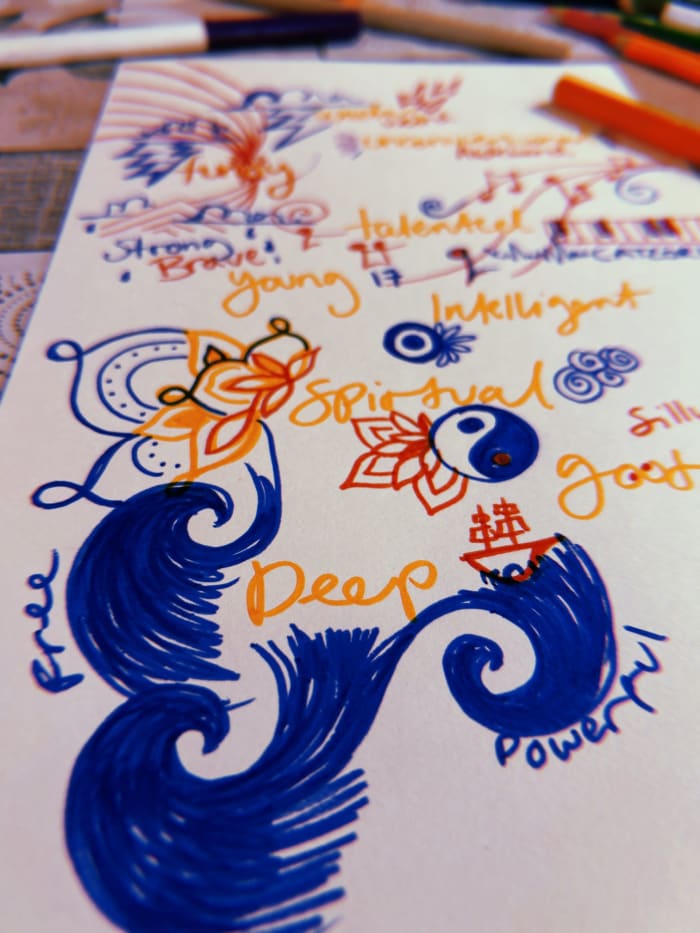
The Art of Letting Go of Resistance: Grief Workshop in Porto
During a grief workshop in Porto, Rachel discovered that fighting her emotions was exhausting her more than the emotions themselves. Letting go of resistance, and picking up a paintbrush, changed everything.
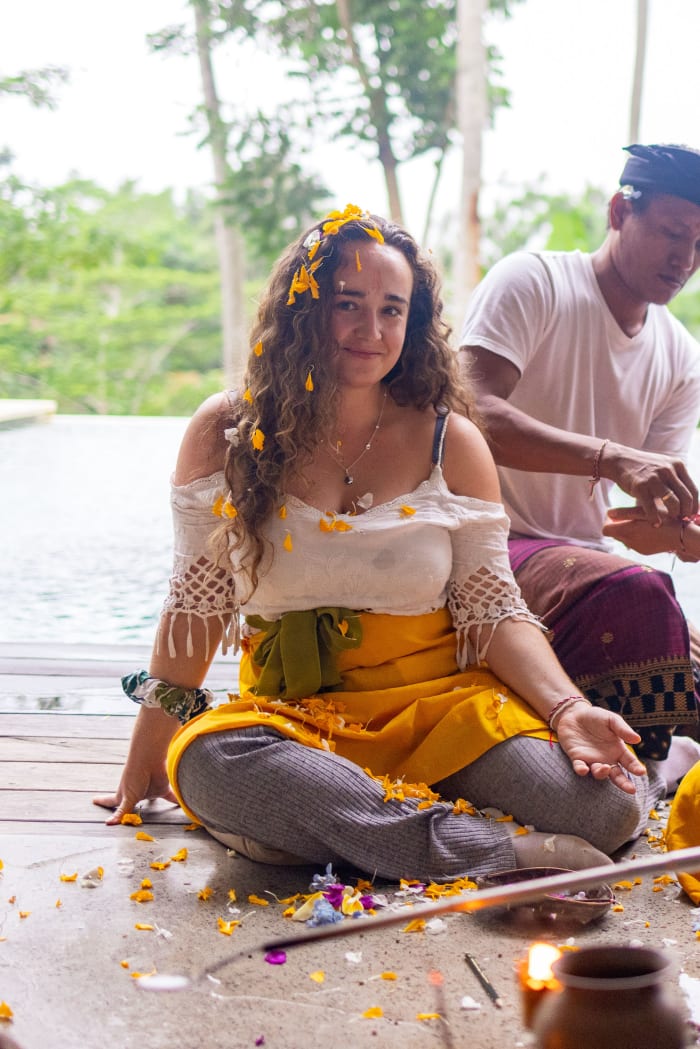
Review: Hebe on Joining Grief Trips Again
I've been on two grief trips, to Portugal and Bali. Rachel has turned her own deep loss into magical experiences where joy and grief can coexist.