Can You Bring a Friend or Family Member on a Grief Trip?

Can you bring a friend or family member on a grief trip? Yes, most retreats will accommodate it, but most people don't, and that's worth sitting with before you decide either way. Coming alone tends to open up a different kind of experience than coming with someone you already know, and neither choice is more correct. What matters is being honest about what you actually want from the week.
Why most people come alone
The majority of people who show up to a grief trip are traveling solo. Some of that is circumstance — grief doesn't wait for a travel companion to be available, willing, or in a position to take a week off. But a lot of it is intentional. Grieving is often the loneliest thing a person does surrounded by people who love them, because everyone around you is grieving something slightly different, on a different timeline, in a different way. There's a particular relief in being somewhere for a week where nobody needs you to manage their experience of the loss too.
That's not a knock on friends or family. It's just a different job. When you travel with someone who also knew the person you lost, part of you is always tracking how they're doing, whether this memory is landing okay with them, whether you should have brought something up in front of them or waited. That tracking is exhausting, and it's the opposite of what a grief trip is trying to give you.
What coming alone actually gives you
Traveling without anyone who knew your person means you can talk about them however you want, whenever you want, without managing someone else's reaction to it. You can cry at breakfast and nobody there has a stake in whether you're "doing better." You can also not talk about it for an entire afternoon without anyone reading meaning into that either.
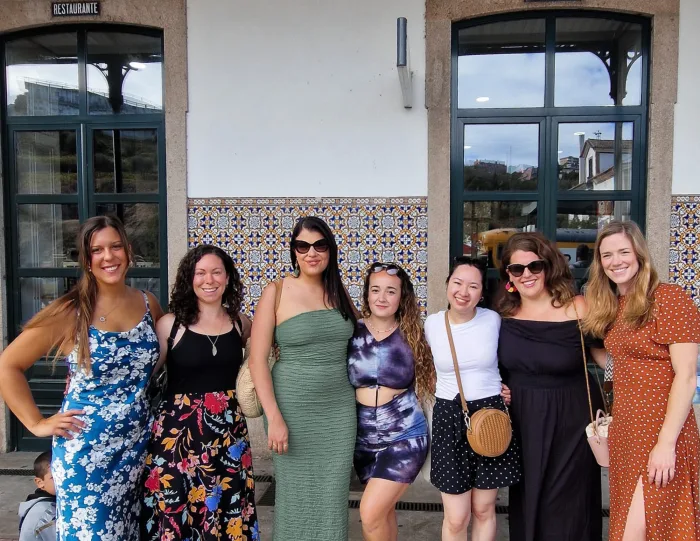
There's also something that happens specifically among strangers who are all carrying loss into the same week. People who come alone tend to describe forming fast, unusually honest connections with people they'd never met before the trip started — precisely because there's no history to protect and no existing relationship to preserve. You don't have to worry about how your grief affects the friendship, because there was no friendship a week ago. A lot of participants say that ends up being the most surprising part of the whole trip: not the destination, but the people they met there.
When bringing someone makes sense
None of that means traveling with someone is the wrong call. Some people genuinely process better with a familiar person nearby, especially early in a loss, or after a loss that's left them feeling unsafe being alone with their own thoughts for a stretch of days. A sibling who's grieving the same parent, a close friend who's been steady through the worst of it, a partner who wasn't connected to the loss at all and is coming along mostly to support you — these are all real, valid reasons to bring someone.
The honest tradeoff is that you gain built-in support and lose some of the anonymity that lets people open up in unexpected ways. You're not a blank slate to the group in the same way, because you arrived already known to at least one other person there. That's not automatically worse. For some people it's exactly the safety net that makes the rest of the week possible.
The dynamic changes when you share the loss
The one situation worth thinking through most carefully is bringing someone who's grieving the same person you are — a sibling after a shared parent, for instance, or a friend group after losing someone in it together. Grief isn't identical even between people who lost the same person. You might have a different relationship to what happened, different memories, different things you're angry or guilty about, and different needs for how much to say out loud. Some people find it grounding to grieve alongside a sibling all week. Others find they hold back — softening a memory, skipping a hard truth, editing themselves — because the person sitting next to them has their own version of the same story and their own stake in how it's told.
Neither reaction is wrong, but it's worth knowing which one is more likely to be true for you before you commit to a week of it.
Worth discussing when you apply
Because group composition affects how the week works for everyone in it, this is genuinely worth raising directly during the application process rather than assuming it'll sort itself out on arrival. If you're considering bringing someone, say so, and say who they are to you and to the loss. It helps the trip get built around who's actually going to be in the room, and it gives you a chance to think out loud, with someone who's done this before, about which version of the week is more likely to give you what you need.
There's no single right answer here, and the choice doesn't have to be permanent — plenty of people who come alone once decide to bring someone the next time, and the reverse happens just as often. What tends to matter most is naming, honestly, what you're hoping this trip does for you, and choosing accordingly.
At Grief Trips, small groups of roughly eight to twelve travel together to Portugal, Morocco, and the Maldives, and Rachel personally reads every application to help think through exactly this kind of question before anyone books a spot.
Curious what a grief trip is actually like?
Small-group grief retreats in Portugal, Morocco, and the Maldives. No pressure, applying just starts a conversation.
Join a Grief Trip ›You might also like

Why a Grief Trip Might Be the Most Powerful Thing You Do for Your Grief
A grief trip will not fix your grief, but it can do something everyday life rarely does: give you a small group retreat where you are met exactly as you are, dedicated space to feel, and unexpected laughter alongside the sorrow.

The Art of Letting Go of Resistance: Grief Workshop in Porto
During a grief workshop in Porto, Rachel discovered that fighting her emotions was exhausting her more than the emotions themselves. Letting go of resistance, and picking up a paintbrush, changed everything.
What Does Diversity Add to Grief Trips?
People often join a grief trip expecting connection with others who share their exact loss. What they find is something wider: perspective from grief that looks nothing like their own, and the quiet relief of no longer carrying it entirely alone.