What Does Diversity Add to Grief Trips?

Diversity on a grief trip adds perspective. Hearing grief experienced through different cultures, relationships, timelines, and circumstances widens what you understand about your own loss, without ever making it smaller. That is one of the most consistent, and most surprising, things people report after a grief retreat.
At first glance, it can seem as though the most meaningful connections will come from those who share the same type of loss. A bereaved parent may imagine they will only feel understood by other bereaved parents. A widow may assume only another widow can truly understand her experience. There is comfort in that similarity. But something unexpected often happens when grief is experienced alongside people whose stories are very different.
How culture shapes the way we grieve
One of the first things that becomes apparent on a small group retreat is how much culture shapes the way we grieve. Some people arrive from families and communities where grief is spoken about openly and shared collectively. Others have grown up in environments where grief is private, rarely discussed, and often carried alone.
Listening to these experiences can be quietly confronting. It invites reflection on the messages we have absorbed about grief throughout our lives, and whether those messages still serve us. Many people leave with a clearer sense of which parts of their grieving process genuinely belong to them, and which parts were inherited from family expectations or cultural norms they never consciously chose.

The practical wisdom of lived experience
There is also real value in the practical wisdom that emerges from lived experience. In everyday life, grief can feel isolating because our understanding of it is limited to our own perspective. On a grief trip, people naturally share what has helped them, what hasn't, and what they've learned through trial and error.
These conversations rarely feel like advice. They feel more like possibilities. Someone may describe a ritual that helped them stay connected to their loved one. Someone else may talk about a practice they eventually let go of because it no longer felt supportive. Hearing these experiences expands the range of options available to you, and often brings permission to release expectations that no longer fit.
When the boundaries around who "gets it" soften
Perhaps the most surprising discovery is how quickly the boundaries around who can understand our grief begin to soften. Many people arrive believing that only those who share their exact loss can truly relate. Yet as conversations deepen, common threads emerge across very different experiences: the loneliness that follows loss, the disorientation of becoming someone you never expected to be, the challenge of existing in a world that keeps moving when your own life feels permanently altered, and the love that remains long after the person has gone.
Recognising this doesn't diminish the uniqueness of your loss. Instead, it widens the circle of people who can sit beside it with understanding.
Different timelines, different kinds of loss
Within the same grief workshop or trip, there may be people whose loss is still painfully recent and others who have carried their grief for many years. This creates a perspective that is difficult to find elsewhere. Those earlier in their grief often glimpse something they couldn't yet imagine for themselves: that it is possible to survive this, not perfectly, not without pain, but genuinely survive it. Those further along often discover how far they've travelled when they recognise their former selves in someone else's story.
Different experiences of death do something similar. Someone grieving a sudden death may hear about the prolonged uncertainty of a terminal illness. Someone who endured years of caregiving may listen to the shock that follows an unexpected loss. These conversations don't create comparisons about whose grief is harder. They widen perspective, and remind us that suffering rarely fits neatly into the stories we tell ourselves about how things should have happened.
What emerges from diversity
There is also something moving about hearing grief through different relationships. A parent, a spouse, a sibling, a friend, and an adult child all experience the same absence from different angles. Listening to these perspectives deepens understanding not only of grief itself, but of the people in your own life who are grieving alongside you.
What emerges from this diversity is not comparison but expansion. Your grief does not become smaller because you hear someone else's story. If anything, it becomes easier to hold. The edges soften slightly as your understanding widens, and you begin to see more clearly what belongs to your own grief, what belongs to culture, and what belongs to love.
In that widening, many people experience a quiet sense of relief. For perhaps the first time in a long time, they are not carrying their grief entirely within the boundaries of their own story. That is, in many ways, exactly what a grief retreat is built to hold space for.
Curious what a grief trip is actually like?
Small-group grief retreats in Portugal, Morocco, and the Maldives. No pressure, applying just starts a conversation.
Join a Grief Trip ›You might also like

Why a Grief Trip Might Be the Most Powerful Thing You Do for Your Grief
A grief trip will not fix your grief, but it can do something everyday life rarely does: give you a small group retreat where you are met exactly as you are, dedicated space to feel, and unexpected laughter alongside the sorrow.
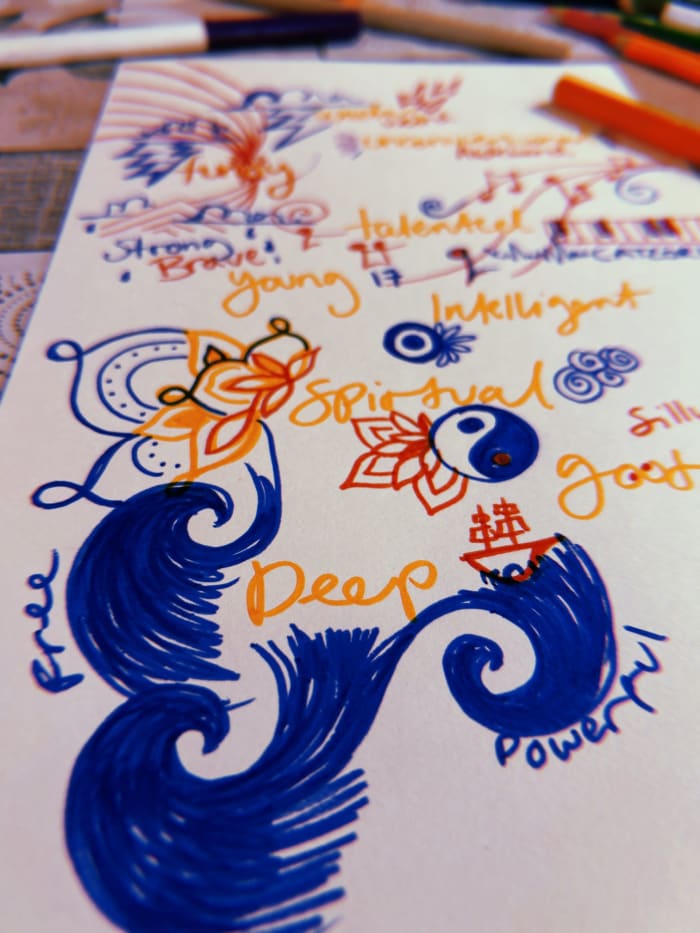
The Art of Letting Go of Resistance: Grief Workshop in Porto
During a grief workshop in Porto, Rachel discovered that fighting her emotions was exhausting her more than the emotions themselves. Letting go of resistance, and picking up a paintbrush, changed everything.

What Actually Happens on a Grief Trip?
So what actually happens on a grief trip? Not scripted healing exercises, not group therapy: shared meals, quiet walks, optional conversation, and the relief of being somewhere grief doesn't need to be hidden or explained.