Grief Retreats After a Sudden or Traumatic Loss
Can a grief retreat help after a sudden or traumatic loss? It can, though what it offers looks different from what it offers after a death that came with warning. There was no chance to say goodbye, no anticipatory grieving to soften the landing, and often a layer of shock sitting directly on top of the grief itself. A retreat built around a small group, low demands, and no fixed script for how someone should be doing by now can offer real steadiness at a moment when ordinary life feels unrecognizable — without asking anyone to be further along than they are.
Why sudden loss grieves differently
Grief after a long illness usually comes with some runway. There's time, however painful, to say things out loud, to prepare a home or a family for what's coming, to grieve in pieces before the death itself arrives. Sudden loss removes that runway entirely. One day is ordinary and the next is not, and there was no version of events where the person had a chance to brace for it.
That difference matters clinically, not just emotionally. Grief researchers distinguish between grief after an anticipated death and grief after a sudden or traumatic one, and the traumatic version tends to carry its own additional weight: disbelief that doesn't lift on schedule, a sense of unreality about ordinary things, hypervigilance, or a mind that keeps replaying the last normal moments looking for a warning it missed. None of that is a sign that someone is grieving wrong. It's a known and common pattern after this particular kind of loss.
What a low-demand structure offers
One of the harder parts of sudden loss is how much the rest of the world keeps expecting from you while none of that has settled. Work still wants you back on a schedule. People still ask how you're doing in a tone that expects "okay" as the answer. A grief retreat works differently because almost nothing is required of you while you're there. Meals happen. A workshop is offered, and attending is optional. Free time exists without anyone needing an explanation for how you spend it. Sharing your story with the group, if you choose to, is never mandatory — many people who come after a sudden loss aren't ready to put what happened into words yet, and that's fine.
The small group size, usually somewhere around eight to twelve people, means the setting never turns into a room full of strangers performing recovery at each other. It's close enough to feel human and small enough that nobody gets lost or put on the spot.
What a retreat is not built to do
It's worth being direct about this: a grief retreat is not trauma treatment, and it isn't a substitute for it. If someone is dealing with acute trauma symptoms after a sudden or violent loss — nightmares, flashbacks, a nervous system that won't settle, an inability to function day to day — that's worth having ongoing professional support for, alongside anything a retreat offers, not instead of it. A retreat can be a genuinely good complement to that support: a few days of steadiness, company, and a change of environment. It isn't designed to process trauma on its own, and it doesn't pretend to be.
What it can do is offer a place to exist without performing wellness for anyone, surrounded by people who understand, without you needing to explain the specific way your loss happened or defend why you're "still" struggling with it.
Is it too soon?
There's no universal answer to how soon is too soon after a sudden loss, and anyone who tells you there is one particular timeline hasn't actually sat with many grieving people. Some people find a retreat helpful within the first few months, when the disorientation is still sharp and they need somewhere that doesn't expect them to have a coherent narrative yet. Others need a year or more before they're ready to be around a group at all. Both are normal. The honest test isn't a calendar — it's whether the idea of a few days away, in company, with no obligation to explain yourself, sounds like relief or like too much right now. If it sounds like relief, that's usually a reasonable sign.
What the days actually look like
In practice, that means daily grief workshops that are optional rather than mandatory, one-to-one support available if you want a private conversation instead of a group one, shared meals that don't require conversation about the loss unless you bring it up, and unstructured time in a place worth being in — the Douro Valley, the edge of the Agafay Desert, a quiet island in the Maldives. Most people who come are travelling alone. Nobody there is expecting you to have processed anything by a certain date.
That's the space this kind of trip is built to hold: not a fix for what happened, and not a replacement for the professional support that acute trauma may call for, but a few days where the pressure to be okay yet simply isn't there. For grief that arrived without warning, that alone can be worth a great deal.
Curious what a grief trip is actually like?
Small-group grief retreats in Portugal, Morocco, and the Maldives. No pressure, applying just starts a conversation.
Join a Grief Trip ›You might also like

Why a Grief Trip Might Be the Most Powerful Thing You Do for Your Grief
A grief trip will not fix your grief, but it can do something everyday life rarely does: give you a small group retreat where you are met exactly as you are, dedicated space to feel, and unexpected laughter alongside the sorrow.

The Art of Letting Go of Resistance: Grief Workshop in Porto
During a grief workshop in Porto, Rachel discovered that fighting her emotions was exhausting her more than the emotions themselves. Letting go of resistance, and picking up a paintbrush, changed everything.
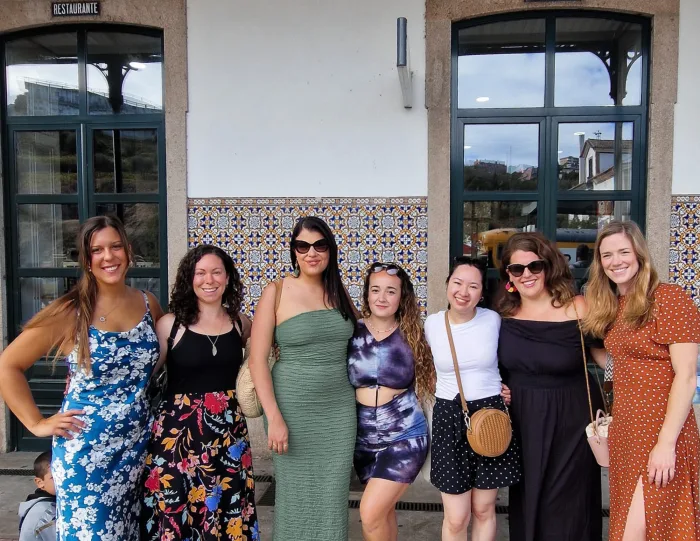
What Does Diversity Add to Grief Trips?
People often join a grief trip expecting connection with others who share their exact loss. What they find is something wider: perspective from grief that looks nothing like their own, and the quiet relief of no longer carrying it entirely alone.