Grief Travel After Losing a Parent

Can travel help after losing a parent? For many people it does, mainly because this grief is so often minimized by everyone else, and a retreat gives it a space where it doesn't need to be justified, downsized, or explained in relation to how old your parent was or how long you saw it coming. Losing a parent reshapes your place in your own family, and that shift deserves somewhere to be felt rather than managed quietly in the background of an otherwise normal week.
This loss happens to people at every age, and it doesn't get easier to categorize the older you are when it happens.
A loss that arrives at every age
Losing a parent in your twenties is a different experience than losing one in your fifties, but neither is automatically harder or easier than the other, and both get misread. Lose a parent young and people call it tragic, sometimes in a way that makes you feel like a case study rather than a person. Lose a parent later in life and the reaction often shrinks to something closer to expected — a life event you should be prepared for, not a rupture you're allowed to be leveled by.
Neither framing is accurate. A parent is one of the first relationships you ever have, present for the entire architecture of who you became, and losing them doesn't scale down in proportion to your age or theirs. Grief doesn't check your birth certificate before deciding how it lands.
Becoming the older generation
One part of this loss that rarely gets named directly is the shift in generational position. While a parent is alive, most people exist somewhere in the middle of their family — someone else is still ahead of them. When a parent dies, especially if it's the last of two, that changes. You become the older generation. There's no one standing between you and the front of the line anymore.
This can surface as a strange, disorienting undercurrent alongside the grief itself — not just missing a person, but registering a shift in your own position in time that you didn't ask for and can't undo. It often intensifies if you have children of your own, watching them lose a grandparent while you inherit a role you didn't feel ready for.
Long illness, sudden loss, and everything in between
The path to losing a parent varies enormously, and the variation matters. Some people spend months or years as a caregiver first — managing appointments, medications, difficult decisions about care, watching a parent change in ways that are hard to reconcile with who they used to be. By the time the death happens, grief has often already been running quietly alongside exhaustion and anticipatory loss for a long time, and the actual loss can arrive as much as relief as devastation, which then brings its own complicated guilt.
Others lose a parent suddenly, with no warning and no chance to prepare, which carries a different kind of aftermath — shock layered on top of grief, unfinished conversations, decisions that were never made explicit. Neither path is easier than the other. They're just different, and they deserve to be treated as different rather than flattened into a single expectation of what "losing a parent" should look like or how long it should take to move through.
When grief gets minimized
Few losses get minimized as consistently as this one, especially once a parent has reached a certain age. "At least they lived a long life." "They're not in pain anymore." "You knew this was coming." Every version of this is meant to comfort, and almost none of it does, because it quietly implies the grief should be smaller or more manageable than it actually feels.
This minimizing often comes from people who mean well and simply haven't lost a parent yet, or lost one under different circumstances. It can leave people grieving a parent feeling like they need to perform a version of "handling it fine" that doesn't match what's actually happening internally — going back to work quickly, reassuring relatives, managing an estate, all while an enormous loss sits mostly unacknowledged underneath the logistics.
Why this loss deserves its own space
A grief retreat built around this kind of loss puts you around other people who lost a parent at very different ages and in very different ways, and none of them need the significance explained to them. Nobody there is going to say "at least they lived a long life," because everyone in the group already knows that line, has probably heard it too many times, and understands exactly why it doesn't help.
What tends to matter most isn't a single conversation about the loss itself, though those have their place. It's the accumulation of small things: a meal where nobody expects you to be "over it," a walk where silence doesn't need explaining, an evening where you can mention your parent without watching the room shift into careful, sympathetic management mode. For a lot of people, that ordinary ease is the part that's been missing since the funeral, when everyone else went back to their lives and the space to actually sit with the loss quietly closed.
There's also something clarifying about being briefly away from the roles a family reorganizes into after a parent dies — the estate to settle, the surviving parent to check on, the siblings dividing responsibilities. A few days away from that reorganization, spent with people who understand the weight of it without needing the backstory, can be a genuine relief rather than an avoidance of it.
That's the kind of space a Grief Trip is designed to offer: room for a loss that's often quietly minimized to be treated, for a few days, as exactly as significant as it is.
Curious what a grief trip is actually like?
Small-group grief retreats in Portugal, Morocco, and the Maldives. No pressure, applying just starts a conversation.
Join a Grief Trip ›You might also like

Why a Grief Trip Might Be the Most Powerful Thing You Do for Your Grief
A grief trip will not fix your grief, but it can do something everyday life rarely does: give you a small group retreat where you are met exactly as you are, dedicated space to feel, and unexpected laughter alongside the sorrow.

The Art of Letting Go of Resistance: Grief Workshop in Porto
During a grief workshop in Porto, Rachel discovered that fighting her emotions was exhausting her more than the emotions themselves. Letting go of resistance, and picking up a paintbrush, changed everything.
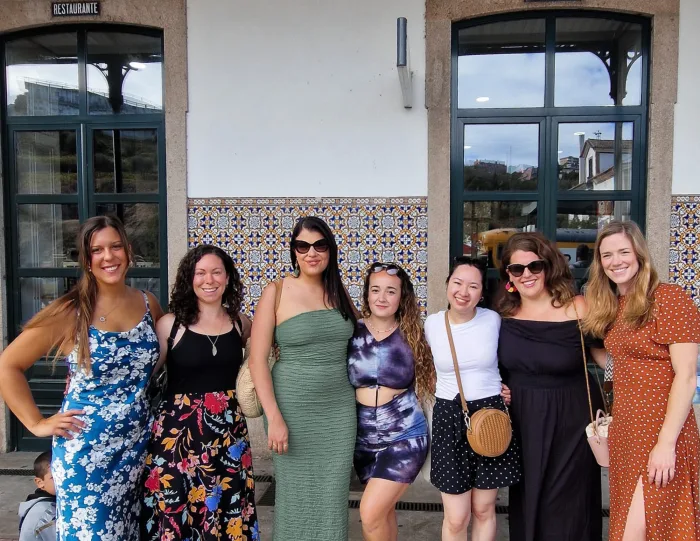
What Does Diversity Add to Grief Trips?
People often join a grief trip expecting connection with others who share their exact loss. What they find is something wider: perspective from grief that looks nothing like their own, and the quiet relief of no longer carrying it entirely alone.