Grief Travel After Losing a Spouse or Partner

Is grief travel worth considering after losing a spouse or partner? For many widows and widowers, yes — not because a trip resolves anything, but because the particular loneliness of this loss often calls for company that doesn't require explanation, in a setting that isn't saturated with shared memory. Grief retreats built for this loss give people a few days where the empty side of the bed, the unmade decisions, and the future that no longer has two names on it aren't things you have to manage alone or narrate to people who weren't there.
Losing a spouse or partner has a shape that's distinct from other kinds of grief, and it's worth naming that shape directly before talking about what helps.
The loss of a shared future
Most grief involves losing someone. Losing a spouse or partner also involves losing a future you'd built around two people existing in it. Retirement plans, the house you were going to grow old in, the trip you kept saying you'd take eventually — all of it was premised on a "we" that no longer exists. That's a different kind of loss than losing someone from your past. It's the loss of a version of your own future that you'd already started living toward.
This is part of why the grief can feel disproportionate to people on the outside, even when the relationship was long and clearly loving. It isn't only about missing a person. It's about every plan that quietly assumed they'd be there.
An identity you didn't choose to lose
There's also an identity shift that gets far less attention than it deserves. If you were part of a couple for years or decades, "we" was a basic unit of how you moved through the world — how invitations were addressed, how decisions got made, how you introduced yourself without thinking about it. Widowhood doesn't just remove a person from your life. It removes a category you belonged to, and replaces it with one — widow, widower — that most people didn't choose and don't recognize themselves in, especially early on.
Some people find themselves grieving the couple they were, almost as a separate thing from grieving the person. Both are real, and both take time.
The specific loneliness of an empty house
The loneliness after losing a partner has a particular texture. It isn't only about missing company in the abstract. It's about the concrete, physical facts of a shared life suddenly being handled solo: the other side of the bed, the chair nobody sits in, the silence at the exact time of day you used to talk. It's grocery shopping for one after decades of shopping for two. It's the small, constant stream of decisions you used to make together, or didn't even think of as decisions because they were simply how the two of you ran a life — now landing entirely on you, one at a time, often for things you never had to think about before.
None of this is dramatic in the way grief is sometimes portrayed. It's quiet, and it's relentless, and it can be exhausting in a way that's hard to explain to people who haven't lived inside a long partnership.
Why company that understands changes things
Friends and family can be wonderful and still not quite reach this. People who haven't lost a partner tend to underestimate how long this grief lasts, and often expect a return to normal on a timeline that has nothing to do with how the loss actually feels from the inside. Well-meaning comments — "at least you had good years together," "you're still young, you could meet someone" — can land as dismissive even when they're meant kindly, because they skip past the specific thing that's actually hard: not the absence of a future partner, but the absence of this one.
Being around other people who've lost a spouse or partner removes the need to translate any of that. Nobody in the group needs the shared-future loss explained to them, or the identity shift, or what it's like to make a decision alone that you used to make together. You can mention the empty side of the bed and not have to follow it with context. That's a specific kind of relief, and it's genuinely hard to get anywhere else, including from people who love you and are trying their best.
A retreat also offers something a support group meeting rarely can: unstructured time together. Meals, a walk, a quiet evening — the parts of the day where a normal life with a partner used to happen automatically. Doing those ordinary things again, in the company of people who understand exactly what's missing from them, tends to matter more than any single facilitated conversation.
What to know before considering one
There's no right amount of time to wait. Some widows and widowers find the first few months too raw for travel of any kind, needing to stay close to routine and to the people who knew their partner. Others find the opposite — that getting away from a house full of reminders, even briefly, is the only thing that gives them room to breathe. Both are common, and neither is more correct.
It's worth choosing a retreat that's honest about what it is: not a place to meet a new partner, not a support group with a plane ticket attached, not a promise that a week away will make the house feel less empty when you get home. The honest version of this offer is smaller and, for most people, more useful — a few days with people who don't need your grief explained to them, in a place that isn't full of the two of you, with enough structure to feel held and enough freedom to just exist for a while without having to hold everything together on your own.
That's the specific space a Grief Trip is built to hold for people navigating this loss.
Curious what a grief trip is actually like?
Small-group grief retreats in Portugal, Morocco, and the Maldives. No pressure, applying just starts a conversation.
Join a Grief Trip ›You might also like

Why a Grief Trip Might Be the Most Powerful Thing You Do for Your Grief
A grief trip will not fix your grief, but it can do something everyday life rarely does: give you a small group retreat where you are met exactly as you are, dedicated space to feel, and unexpected laughter alongside the sorrow.

The Art of Letting Go of Resistance: Grief Workshop in Porto
During a grief workshop in Porto, Rachel discovered that fighting her emotions was exhausting her more than the emotions themselves. Letting go of resistance, and picking up a paintbrush, changed everything.
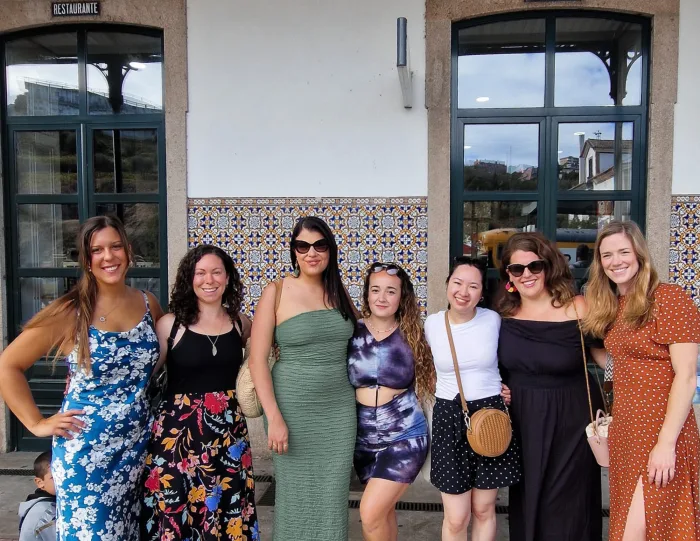
What Does Diversity Add to Grief Trips?
People often join a grief trip expecting connection with others who share their exact loss. What they find is something wider: perspective from grief that looks nothing like their own, and the quiet relief of no longer carrying it entirely alone.