Life After Loss: What No One Tells You

Life after loss doesn't begin in a clear or defined way. External life continues in familiar patterns while internal experience shifts in ways that are less visible and harder to articulate. People often expect grief to follow a recognisable arc: intense at first, gradually receding until something resembling a normal life resumes. What many discover instead is that grief doesn't follow a predictable shape. It moves differently across seasons, relationships, and circumstances. It can feel distant for a while and then return with unexpected force. It doesn't simply diminish over time. It changes.
Time becomes less linear
One of the things that surprises people most about life after loss is what happens to time. Ordinary time continues. Weeks pass. Anniversaries arrive. Other people's lives move forward. And yet, internally, time can feel suspended around the loss itself. Dates carry weight. Seasons become associated with memory. Certain times of year feel heavier than others, in ways that are difficult to explain to those who haven't experienced significant loss.
Memory behaves differently too. Some memories feel vivid and close while others become harder to access. There can be moments of sudden, unexpected recall (a smell, a song, a particular light at a certain time of day) that bring the person back with a clarity that's both comforting and disorienting.
Identity shifts in ways that are rarely acknowledged
Perhaps one of the least discussed parts of life after loss is how it changes a person's sense of identity. This is especially true when the person who died was central to how someone understood themselves: a parent who loses a child, a spouse who loses their partner, an adult child who loses the last surviving parent. These losses don't only remove a person from someone's life. They alter the structure of the life itself.
People sometimes describe feeling like a different person after loss. Not dramatically, not in every moment, but in a quieter, more persistent way. Things that once mattered can lose their significance. The version of yourself that existed before the loss can feel distant, and the version you're becoming isn't yet fully formed.
There is no return to what was
One of the most important, and least welcome, truths about life after loss is that there is no return to a previous version of life. This isn't the same as saying life can't be meaningful, joyful, or even beautiful again. It can be all of those things. But it will be a different life, shaped by the absence of someone who mattered.
People who try to return to exactly who they were before a significant loss often find the effort exhausting and ultimately unsuccessful. The work of life after loss isn't recovery in the sense of restoration. It's adaptation: learning how to carry what can't be put down, and how to exist in a world that feels permanently altered while still finding reasons to remain present in it.
Grief does not end: it becomes part of how life is lived
Over time, people stop waiting for life to go back to what it was and begin adjusting to what has changed. Grief doesn't disappear. It becomes part of how life is experienced, sometimes more present, sometimes quieter, but rarely absent entirely. The goal, if there is one, isn't to reach a point where grief is no longer felt. It's to reach a point where grief can be carried alongside everything else without consuming the whole.
This is what no one tells you about life after loss. Not because it's a secret, but because it's difficult to communicate to someone who hasn't yet lived it. The people who understand it most are usually the ones already inside it, which is exactly why so many find their way to a grief trip or small group retreat: not to fix the grief, but to be around people who don't need it explained.
Curious what a grief trip is actually like?
Small-group grief retreats in Portugal, Morocco, and the Maldives. No pressure, applying just starts a conversation.
Join a Grief Trip ›You might also like

Why a Grief Trip Might Be the Most Powerful Thing You Do for Your Grief
A grief trip will not fix your grief, but it can do something everyday life rarely does: give you a small group retreat where you are met exactly as you are, dedicated space to feel, and unexpected laughter alongside the sorrow.
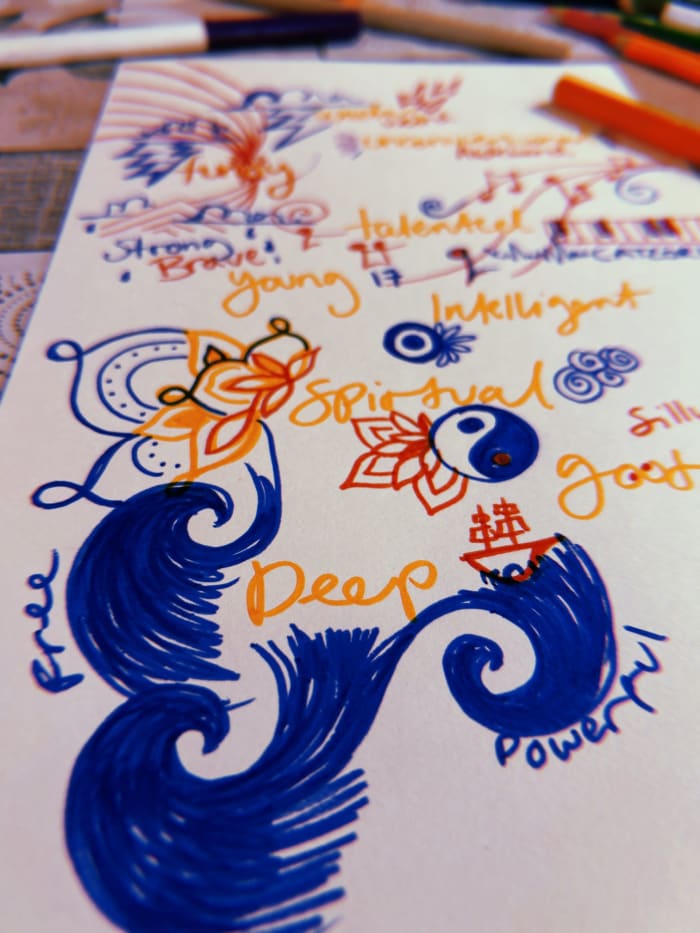
The Art of Letting Go of Resistance: Grief Workshop in Porto
During a grief workshop in Porto, Rachel discovered that fighting her emotions was exhausting her more than the emotions themselves. Letting go of resistance, and picking up a paintbrush, changed everything.

What Does Diversity Add to Grief Trips?
People often join a grief trip expecting connection with others who share their exact loss. What they find is something wider: perspective from grief that looks nothing like their own, and the quiet relief of no longer carrying it entirely alone.