What Is a Grief Retreat? The Complete Guide
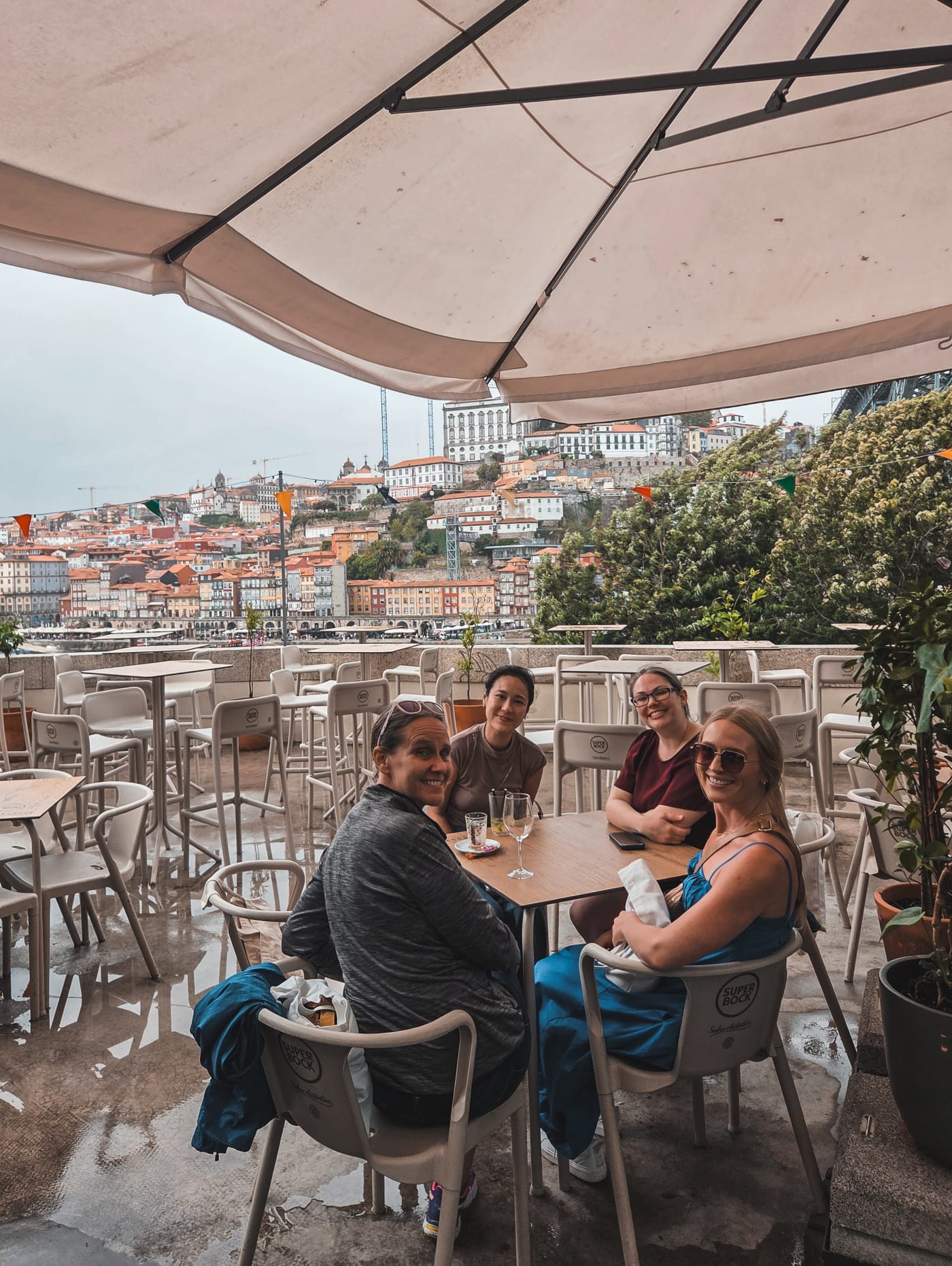
What is a grief retreat? A grief retreat is a small-group trip, usually four to seven days, built around shared meals, unstructured time in a destination worth being in, and optional facilitated conversation among people who are also grieving. There's no set itinerary for feelings and no requirement to talk about your loss at all. The structure exists to hold space for grief, not to produce a particular outcome or timeline.
That definition covers the mechanics. The rest of this guide covers why the format works, who it tends to suit, and how to tell if it's worth considering.
What actually happens on a grief retreat
Most grief retreats run somewhere between four days and a week, in a location chosen for being restorative rather than remarkable: coastal Portugal, the foothills of Morocco's Atlas Mountains, a quiet stretch of the Maldives. Groups tend to be small, often somewhere between six and sixteen people. Small enough that everyone is a person rather than a face in a crowd, large enough that no single relationship has to carry the whole weight of the week.
The daily shape is usually simple: a shared breakfast, a loosely optional activity or excursion, real free time, an evening meal together. Somewhere in that rhythm, most retreats build in one or two facilitated sessions: a trained grief counselor or experienced facilitator holding space for a group conversation, or offering one-on-one time to anyone who wants it. Attendance at these sessions is typically optional, and so is participation once you're there. Nobody is required to share their story, cry on cue, or perform any particular stage of "healing" for the benefit of the group.
Some retreats build in a specific ritual: writing a letter, a shared meal in someone's memory, a moment set aside for whatever the group needs it to be. Others keep things looser, letting conversation happen or not happen depending on the day. Both approaches are common, and neither is more legitimate than the other. What they share is a refusal to script grief into a fixed shape.
What makes this different from an ordinary vacation isn't the destination. It's who else is there, and what everyone already understands without being told. You don't have to explain why you're quiet at breakfast. You don't have to answer "so what do you do?" with your whole story, or brace for someone to visibly not know what to say when you mention your loss. Everyone in the group is carrying something. That shared context changes the texture of the days in a way that's genuinely hard to describe until you've been in it.
Almost everyone arrives alone. That's worth saying plainly, because it's often the thing people worry about most before booking. Solo travelers aren't the exception on a grief retreat; they're the default. Nobody is pairing off with a spouse or a friend group who already know each other, so the usual vacation dynamic of insiders and outsiders doesn't really form. Facilitators are typically either trained grief counselors or people with direct experience running these kinds of groups, and reputable retreats will tell you upfront who's leading the trip and what their background is, rather than leaving it vague.
What a grief retreat is not
The word retreat carries associations that can work against clear expectations, so it's worth being specific about what this isn't. A grief retreat is not a wellness spa trip with grief as a theme. There's no requirement to do sunrise yoga or journal your feelings into a prescribed template, though some people find those things useful and they're often available as options, not obligations.
It's also not group therapy, even when a trained facilitator is present. Facilitators hold space and offer structure; they aren't running a clinical treatment program, and a retreat isn't a substitute for therapy or psychiatric care if that's what someone needs. Reputable retreats will say this plainly rather than blur the line for marketing purposes.
It's not a place where everyone is expected to be visibly sad the whole time either, or where laughter and grief are treated as contradictions. In practice, both tend to show up in the same afternoon, sometimes in the same conversation. Grief retreats tend to hold that contradiction better than most settings do, largely because nobody there needs convincing that it's normal.
And a grief retreat isn't a fix. Nobody comes back from a week away "over" a loss, and that was never the goal. Any retreat that implies otherwise is worth treating with suspicion. The realistic goal is closer to relief: a stretch of days where grief doesn't have to be managed, explained, or hidden, spent among people who aren't asking you to.
Who grief retreats are for
There's no single profile. People attend after losing a spouse or partner, a parent, a child, a sibling, a close friend. Some arrive a few months out from a loss, still in its rawest stretch. Others arrive years later, when grief has gone quiet but hasn't gone anywhere, looking for a space to finally sit with it properly instead of managing it around the edges of a full life.
What tends to unite people who find these trips useful has less to do with the loss itself and more to do with where they are in relation to it: wanting company without needing to explain themselves first, wanting some structure without wanting to be managed, wanting a destination worth being in rather than one more thing to get through.
They tend not to suit someone in acute crisis who needs immediate clinical support, or someone hoping to be told exactly what to do with their grief. The format rewards people who can tolerate some ambiguity, who don't need every hour scripted, and who are looking for company more than instruction. Age, relationship to the person who died, and time since the loss all matter less than that basic orientation.
How this differs from grieving alone, or with friends and family
Grieving alone has an obvious cost: isolation, and the particular exhaustion of carrying your own grief with no outside perspective on it. But grieving with existing friends and family, while often necessary and often good, comes with its own quiet friction. The people closest to you are frequently grieving too, or worn out from supporting you, or simply unsure what to say once everyone else has stopped asking how you're doing. You can end up managing their discomfort with your grief on top of the grief itself.
A grief retreat removes that particular dynamic. The people around you are strangers, which turns out to work in your favor rather than against it. There's no history to protect, no family role to maintain, no one keeping score of how you're supposed to be doing by now. You can be as quiet or as open as a given day calls for, and nobody reads too much into either.
This isn't an argument against grieving with people who know you. It's a different kind of company, useful for different reasons, and many people find the two complement each other rather than compete.
How to know if one might help
A useful test is less "how bad is my grief" and more "what do I actually want right now." If what you want is distraction, an ordinary vacation may serve you better. If what you want is company that understands without needing translation, a change of scenery that isn't loaded with memory, and permission to let grief take up as much or as little space as it needs for a few days, a retreat is built for exactly that.
It's worth being honest about timing, too. There's no correct number of weeks or years after a loss to consider this. Some people find the first few months too raw for travel of any kind; others find early distance from routine genuinely useful precisely because everything at home is a reminder. Both reactions are normal. The format doesn't require a particular stage of grief, only a willingness to be around other people who are carrying something too, and a wish for a few days that aren't defined solely by absence.
That's the space a Grief Trip is designed to hold: a small group, a place worth being in, and enough structure to feel held without ever feeling managed.
Questions people ask about grief retreats
What is a grief retreat?
A small group of grieving people travelling together for four to seven days, with shared meals, free time and optional grief workshops. Nobody has to talk about their loss, and nobody is told how to grieve.
How long is a grief retreat?
Most run four days to a week. Grief Trips retreats are six or seven days, which is long enough for a group of strangers to stop feeling like strangers.
How much does a grief retreat cost?
It depends on the length, the place and what is included. A Grief Trip is priced per person by room, and the experience is the same in every room: privacy is the only thing that changes. Morocco starts from USD 3,050 and the Maldives from USD 2,850. That covers accommodation, the grief workshops, one-to-one grief support, most meals, activities and local transport; flights, visas and travel insurance are not included. A non-refundable 30% deposit holds a place, the balance is due a month before the trip, and if cost is what stands in the way, there is financial access support, including payment plans.
Can I go on a grief retreat alone?
Yes, and most people do. For some it is their first trip on their own. All the group logistics are handled, so what you bring is your flights, your visa and your travel insurance.
Is there a grief retreat near me?
Grief Trips are travel retreats: part of what helps is being somewhere that is not loaded with memory, so most people fly in from somewhere else.
Where Grief Trips runs grief retreats
Grief Trips runs small-group grief retreats of six or seven days. Two are open to book now: Morocco, 3–9 January 2027, in a Marrakech riad and the Agafay Desert, and the Maldives, 8–13 February 2027, on Goidhoo Island. Three have free waiting lists: Bali in May 2027, Australia in June 2027, and Portugal, planned for August 2027.
If you are wondering how grief and travel fit together at all, start with what grief travel is.
Curious what a grief trip is actually like?
Small-group grief retreats in Portugal, Morocco, and the Maldives. No pressure, applying just starts a conversation.
Join a Grief Trip ›You might also like

Why a Grief Trip Might Be the Most Powerful Thing You Do for Your Grief
A grief trip will not fix your grief, but it can do something everyday life rarely does: give you a small group retreat where you are met exactly as you are, dedicated space to feel, and unexpected laughter alongside the sorrow.

The Art of Letting Go of Resistance: Grief Workshop in Porto
During a grief workshop in Porto, Rachel discovered that fighting her emotions was exhausting her more than the emotions themselves. Letting go of resistance, and picking up a paintbrush, changed everything.

What Does Diversity Add to Grief Trips?
People often join a grief trip expecting connection with others who share their exact loss. What they find is something wider: perspective from grief that looks nothing like their own, and the quiet relief of no longer carrying it entirely alone.