Grief travel
Grief travel means going somewhere new with people who understand loss, and letting your grief come with you instead of asking it to stay home.
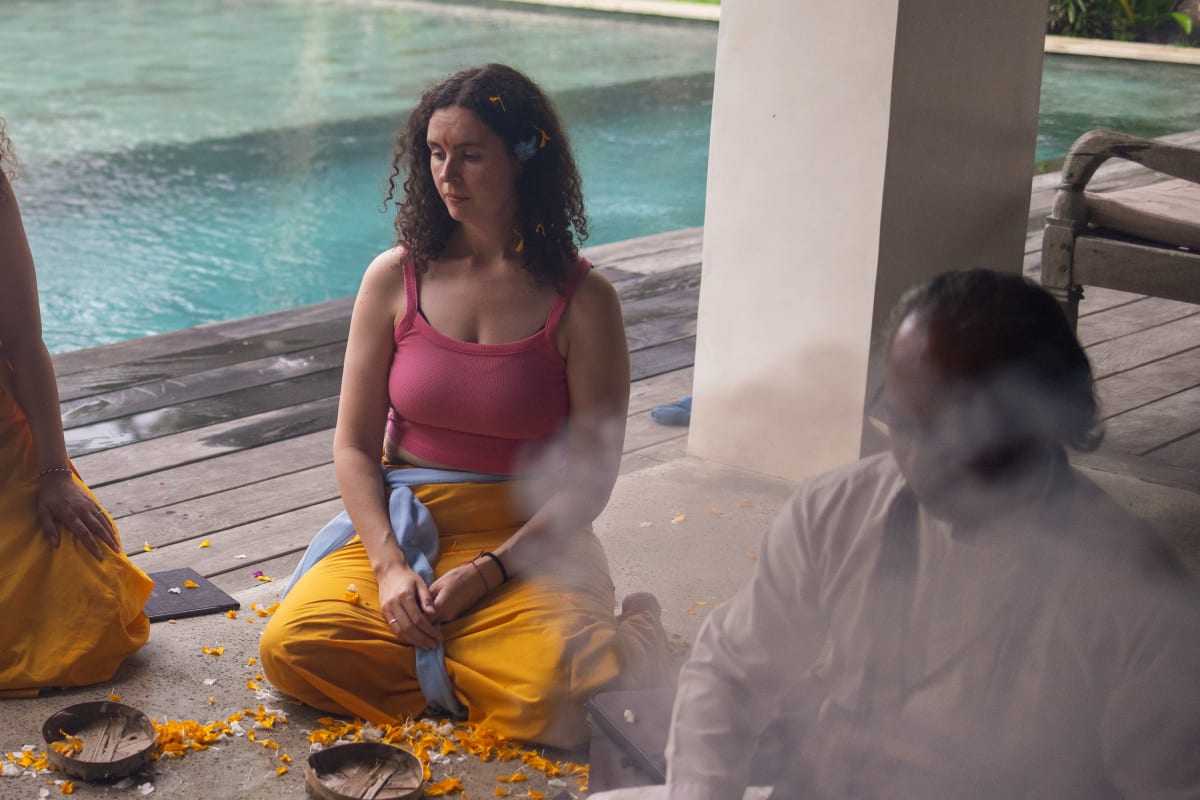
Most people find the phrase before they find the thing. They are somewhere in the first year or the fifth, they have run out of people who still ask, and they type something into a search bar to find out whether going away while grieving is allowed.
It is allowed. It is also more common than it looks, because the people doing it rarely announce it that way.
What grief travel actually is
At its simplest: travel where the grief is the point rather than the thing you are trying to outrun. You go somewhere else, usually with other bereaved people, and you stop doing the daily work of managing everyone else's discomfort about your loss.
That last part is most of it. A lot of grief at home is admin. You track who knows, who has forgotten, who will change the subject, whose face will do the thing when you say your person's name. Somewhere new, with people carrying their own, that whole layer switches off. You are not the sad one at the table. Everyone at the table has a person.
What tends to surprise people is that it is not solemn. Groups laugh a lot, often about things that would land badly anywhere else. Grief humour needs an audience that gets it, and this is one.
What it is not
Not a holiday. A holiday asks you to have a nice time. This asks nothing of you at all.
Not therapy. A grief trip is peer support and lived experience, not clinical treatment. Some people do both. If you are in crisis, a trip is not the right first step, and a professional is.
Not a fix. Nobody returns you improved. You come back with the same loss, having spent a week not having to explain it.
Why being somewhere else changes how grief feels
Home is dense with the person. Their chair, their shortcut to the station, the aisle in the supermarket you now avoid. That density is precious and it is also relentless, and there is no way to turn it down while you are standing in it.
Somewhere unfamiliar, grief has more room to move. People describe crying at a sunset and nobody making it a thing, or going a whole afternoon without the weight, then feeling guilty about the afternoon, then finding someone to say that to who understands both halves.
Research on bereavement and travel is thin and mostly indirect, and it is worth being honest about that rather than dressing it up. What there is points at the same few mechanisms: distance from routine triggers, time that is genuinely unstructured, and company that does not require translation.
More on the evidence: the science of grief and travel, and what the research actually says.
Is it too soon?
There is no correct interval. People come a few months after a death and people come twenty years later, and both belong on the same trip. Grief does not run to a schedule, whatever the timeline other people seem to be working from.
The more useful question is practical rather than emotional. Can you get yourself on a plane? Can you be around other people for a week without it costing more than it gives? If the honest answer is not yet, that is information, not failure, and the trips will still be here.
Going on your own
Most people arrive alone. That is the normal case rather than the brave exception, and it is part of why these groups tend to close ranks so quickly: nobody has a pre-existing pair to retreat into.
What a grief trip looks like in practice
Grief Trips runs small-group retreats, six to seven nights, eight to twelve people. The days hold grief workshops, one-to-one time, and real travel in the place you have gone to - the Douro Valley, a riad in Marrakech, an island in the Maldives. Everything is optional. Nobody is made to share.
Rachel founded Grief Trips after her father died in 2021, and facilitates the retreats herself. More about her, and what a day actually looks like.
Questions people ask before booking
Is grief travel the same as a wellness retreat?
No. A wellness retreat is usually built around feeling better by the end of it. This is built around feeling what is already there, with people who recognise it.
Does it replace therapy?
No, and it is not designed to. Plenty of people do both, and some find the trip gives them something to bring back to their therapist.
What if I cry the whole time?
Then you cry, and you are in the right place for it. More questions answered here.
Read more on grief travel
- Why travel feels different after loss What changes when the person you would have told is not there to tell
- Is it okay to travel after a death? On guilt, permission, and who you think you owe
- When is it too soon to travel? The practical version of the question
- Is travelling while grieving helpful? An honest answer, including when it is not
- Travelling alone to a grief retreat Safety, logistics, and arriving on your own
- Grief travel after losing a parent What tends to be specific to this loss
- Grief travel after losing a spouse or partner Travelling without the person you travelled with
- Grief travel after losing a sibling The loss people ask about last
- What is a grief retreat? The longer guide to how they work
Somewhere to go, with people who understand
Small-group grief retreats in Portugal, Morocco and the Maldives. Applying just starts a conversation. No payment, no pressure.